- 0044 7407407681
- sales@projectspiping.co.uk
- Office Timing: 08.30 AM- 05.00 PM

Gaskets
Pipe Gaskets
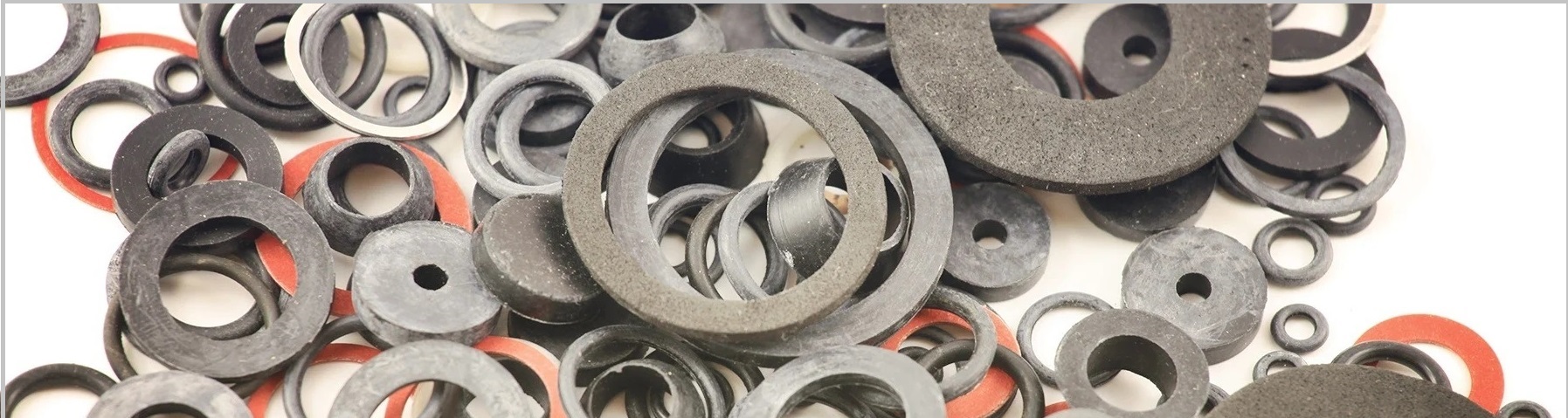
We manufacture and supply pipe gaskets, otherwise known as flange gaskets, in a range of materials. We hold dedicated tooling for the majority of standard sizes and tables and can manufacture special or one-offs to your own measurements and specifications. If you can’t find the information, you’re looking for here, or wish to place an order then please contact us. The prices of pipe gaskets depend upon volume, material and thickness so please contact us for a quotation.
The most commonly used gaskets in piping are standard flange gaskets in rubber or fiber, or spiral wounds. For particularly large pipes, gaskets can be manufactured in segments of rubber and joined together.
Material Selection
Pipe gaskets can be manufactured from many different gasket materials. The right material to use depends upon the application and the environment in which the gasket will be used. The contents of the pipe, including the range of temperatures and pressures under which it is expected to operate will dictate material selection. Material specification should also take into account the flange being used. If you are in doubt about which material you need, please contact us for technical support.
A non-asbestos fiber or graphite material can be specified for steam applications. For diesel or other fuels, a non-asbestos fiber or quality nitrile rubber (BS 2751) should be used. Because of the extra additives in modern fuels, lower grade nitrile can be affected and break down. This is mistakenly blamed on the fuel itself when in reality it is caused by the corrosive nature of the additive. If you are specifying for a particular chemical then please see our guide to gasket chemical resistance.
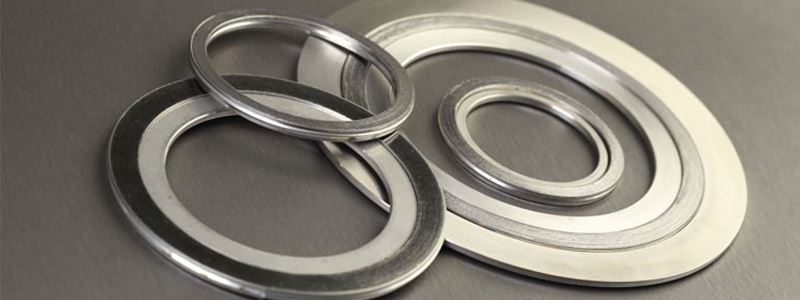
If you are undertaking a piping project, you should be thoughtful about the material you are going to use. And if you plan to use a flange, there is a lot to know. Flanges help connect valves, pipes, pumps, or other equipment that complete a piping project.
Experts make flanged joints by bolting together two flanges. This means that the types of gaskets you use matter a lot during the piping project. A gasket will help provide a seal between the flanges.
Gasket selection is quite crucial and the installation process must stand out. The choices you make will influence the overall performance and durability of the piping system. For your project to be a success, there are essential things to know about gaskets used in piping.
Types of Gaskets
Metallic Gaskets
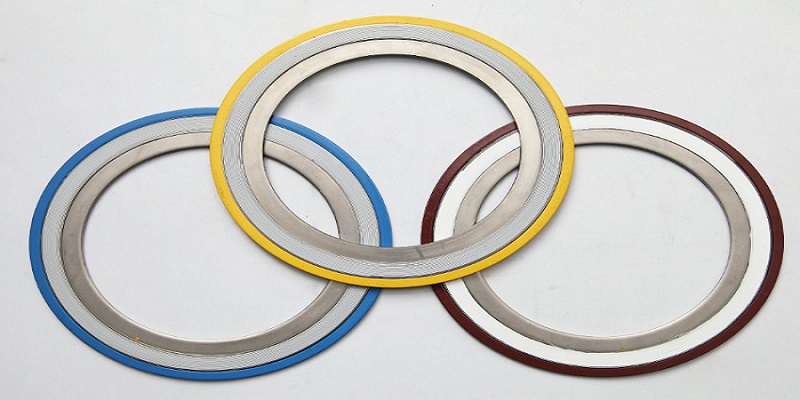
Metallic Gaskets are used for sealing higher temperature and pressure applications, where non-asbestos materials will fail. Typical applications are for heat exchangers, compressors, condensers, pumps, and valves.
Often used metallic gaskets are ring-type-joint gaskets (RTJ). They are always applied to special, accompanying flanges which ensure good, reliable sealing with the correct choice of profiles and material.
Ring Type Joint gaskets are designed to seal by "initial line contact" or wedging action between the mating flange and the gasket. By applying pressure on the seal interface through bolt force, the "softer" metal of the gasket flows into the microfine structure of the harder flange material, and creating a very tight and efficient seal.
Non-Metallic Gaskets
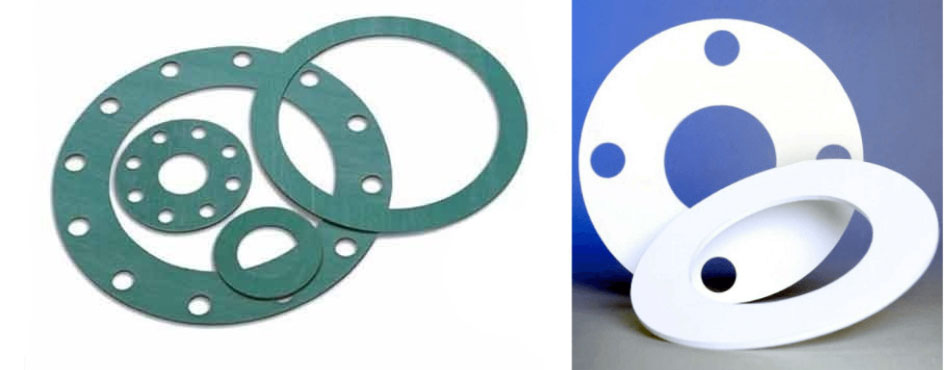
The material used to make gaskets matters. And as one of the top type used in the industry, non-metallic gaskets are made of graphite, PTFF, Teflon, rubber, and Compressed Non-Asbestos Fiber (CNAF). These types of amazing gaskets are also referred to as soft gasket.
When using full face gasket, keep in mind that you can only use it with (Flat-Face) FF flange for short-term connection or sealing of utility lines. On the other hand, flat-ring gaskets are excellent for raised face (RF) flanges. The common types of rubber gaskets widely used in the pipeline industry are; chloroprene gasket, silicone gasket, and Ethylene Propylene Diene Monomer (EPDM).