- 0044 7407407681
- sales@projectspiping.co.uk
- Office Timing: 08.30 AM- 05.00 PM

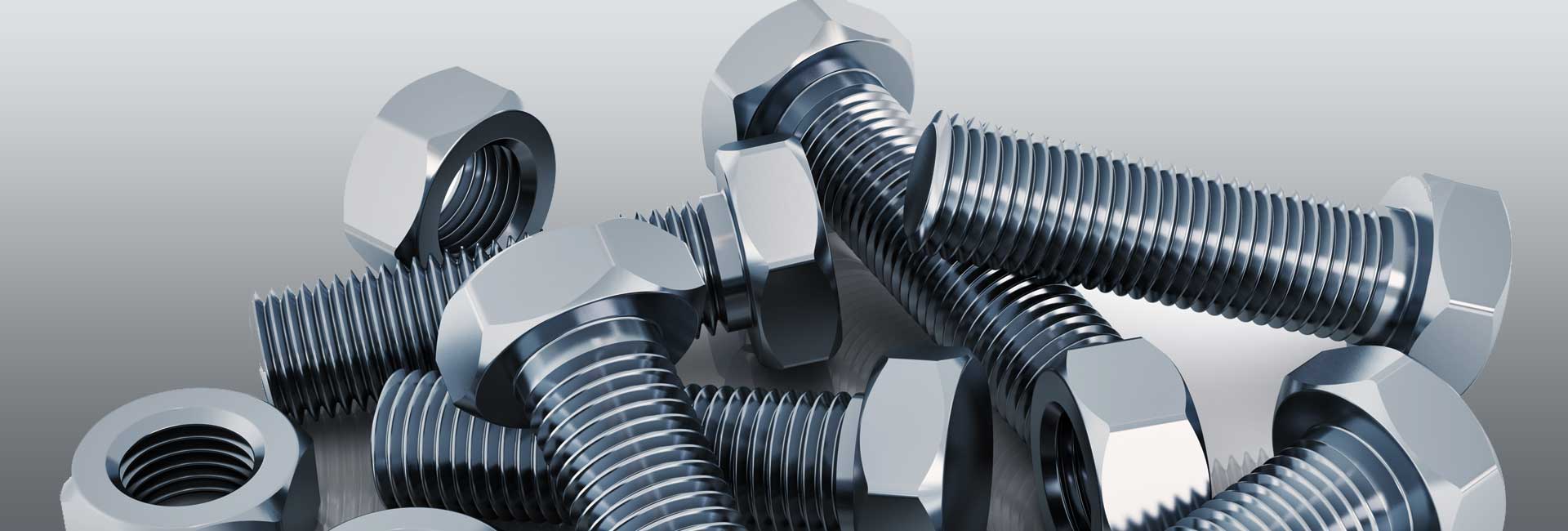
Stud Bolt
Stud Bolts and Nuts
One threaded steel rod and two (matching) hexagonal heavy steel nuts make up a stud bolt. The essential components of flanged connections are stud bolts and nuts as they provide appropriate sealing. The hex steel nuts should be made of the same material as the threaded rod (generally, stud materials ASTM A193 match with nuts materials ASTM A194).
The ASME B16.5 standard specifies stud bolts and nuts for ASME flanges (number, size, and length of needed stud bolts) by flange diameter, pressure class, and face finish (Raised Face, Flat Face, Ring Type Joint).
Threaded Rod
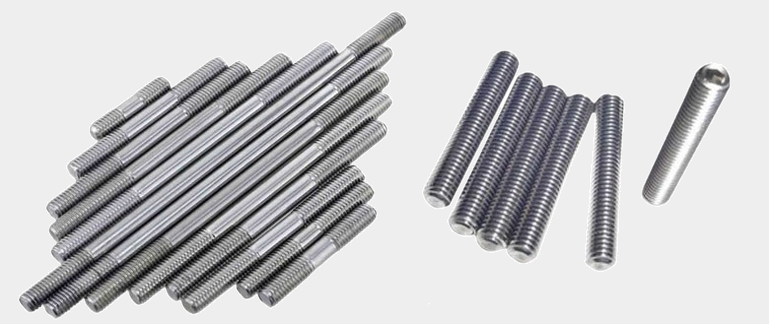
Thread Pitch and Thread Series of Stud Bolt
The stud is threaded as per the ASME B1.1 specifications. The steepness of the thread angle, measured in threads per inch, is referred to as “thread pitch.” Because it is fairly easy for the manufacturer to check the symmetrical thread pitch type with a “V-profile” (a 60-degree angle) as compared to the non-symmetrical type, it is the most commonly used thread. The number of threads per inch (“TPI”) applied to a single diameter is used to measure the thread series.
Nuts for Stud Bolts

2 large hex steel nuts must be fastened at opposite ends of the rod to secure a stud. The stud and the steel nuts connect precisely due to the friction existing between their respective threads, by a minor stretching of the bolt, and the compression of the two joined parts. Steel nuts had a squared head in the past. Six-sided hexagonal head nuts have completely replaced the square nut with four sides because they allow for faster and more effective screwing on the stud.
Nuts for petrochemical applications are tightened to a precise torque using special torque wrenches. The mechanical properties of the steel nut material must be adequate for the strength of the mated bolt. The ASME B18.2.2 specification specifies the sizes and thicknesses of heavy steel nuts for stud bolts.
Standards for Stud Bolt
A number of ASME standards regulate the design and manufacture of stud bolts, which are mentioned below:
- The diameter and length are covered by ASME B16.5 and ASME B16.47.
- The coarse and fine thread series are specified by ASME B1.1.
- Square and hex bolts and screws are defined under ASME B18.2.1
- Square and hex nuts are specified in ASME B18.2.2.
- Lock washer specifications are provided in ASME B18.21.1.
- Plain washers are specified in ASME B18.22.1.
Materials for Stud Bolt
The most often used flange material for high-temperature and high-pressure uses is ASTM A193. B7 and B7M are the most commonly used A193 material grades. ASTM A320 Gr. L7, L7A, and L7B are used for low-temperature services. Other stud bolt materials are as follows:
- ASTM A354 Gr BC, BD
- ASTM A540 Gr B21 to B24
- ASTM A193 Gr B5, B6, B8, B16, B8M, B8A, B8T, L7, B17B.
- ASTM A453 Gr 660A/B/C/D
- ASTM A913 Inconel 718
- ASTM A320 Gr L7M, L43, B8, B8A, B8T, B8MA, B8C
- ASTM A182 Gr S31803, S32205