- 0044 7407407681
- sales@projectspiping.co.uk
- Office Timing: 08.30 AM- 05.00 PM

Flanges
WELDING NECK
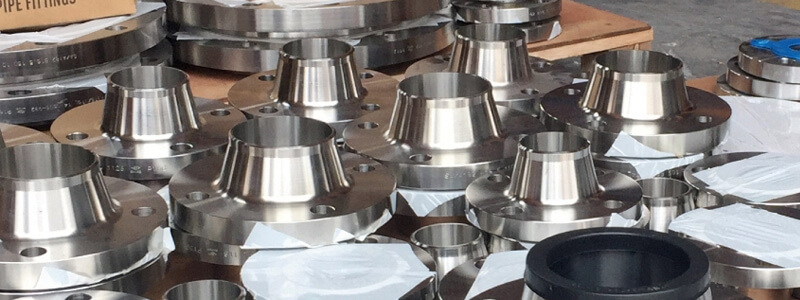
Weld Neck Flange is flanges that designed to be joined to a piping system by butt welding. This kind of flange include lots of specification. Weld Neck Flange is expensive because of its long neck and cost of people for contact WN flange with pipeline or fitting but is preferred for high-stress applications. The necks, or hubs, transmits stresses to the pipeline.
The gradual transition of thickness from the base of the hub to the wall thickness at the butt weld provides important reinforcement of the Weld Neck Flange. The bore of Weld-Neck flange matches bore of the pipeline, reducing turbulence and erosion.
| Standards | ASNV/ASTM B16.5 / 16.36/16.47A/16.47B B2220 — 2001, DIN2527/ 2636/2637 /2638/2566/2576/2633/2635/2642/2653/2655. BS 1560-3.1, BS4504-3.1, AS2129-2000 |
|---|---|
| Rate | From 150LBS to 2500LBS / PN10 to PN400 |
| Sizes | From 1/2" to 42" |
| Material | Carbon steel, Stainless steel, Alloy Steel, Special Alloy. |
Flanges
SLIP ON
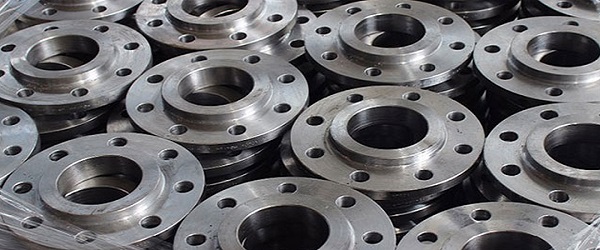
Slip on flange also named as SO flange. SO flanges slip over pipes and are designed to bit slightly bigger on the inside than the pipe. They connect to the pipe through a fillet weld at the flange top and bottom. It is used to insert the pipe into the inner hole of flange, as the flange inner diameter is little bigger than the pipe’s outer diameter, pipe and flange could be connected by lap welding at the top and bottom of the flange.
Common outer diameters: 1/2 inch to 24 inch. Special customized diameters: up to 60”. Material Types: Stainless Steel, Alloy Steel, Carbon Steel Class range: Class 150 to 2500. PN 2.5 to PN 250. Flange face type: RF, RTJ Octal offers slip on flange with materials standards in ASTM A105, ASTM A182, ASME B16.5, BS 3293, DIN 86029.
| Standards | ASNVASTM B16.5 / 16,36/16.47A/16,.47B B2220 — 2001, DIN2527/2636/2637/2638/2566/2576/2633/2635/2642/2653/2655, BS 1560-3.1, BS4504-3.1, AS2129-2000 |
|---|---|
| Rate | From 150LBS to 2500LBS / PN10 to PN400 |
| Sizes | From 1/2" to 42" |
| Material | Carbon steel, Stainless steel, Alloy Steel, Special Alloy |
| Type | RE FF RT |
Flanges
BLIND
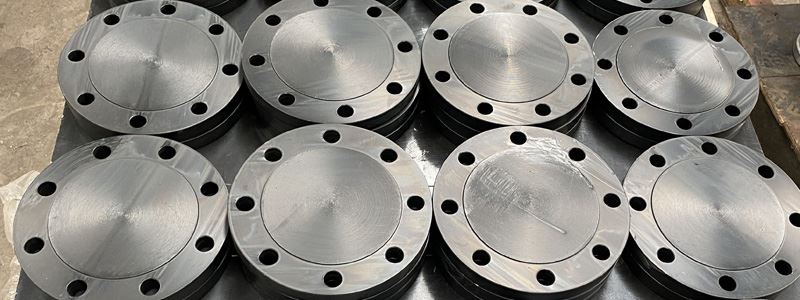
Blind flanges, just like standard pipe flanges, can be raised face (RF) or flat faced (FF). If the flange is RF we would recommend a standard ring gasket that is appropriate for the service and/or test. If it is FF we would TYPICALLY use a full face gasket, because the most common reason the flange is FF is that it is not designed to handle the bending forces that result when using a ring gasket or a RF flange against the FF flange. Again, we treat a blind flange just like any other pipe flange.
A common request for gaskets with a blind flange is for a gasket with no ID; a gasket with a solid center. The customer might ask for these solid gaskets with bolt holes or without. If the blind flange is a standard ASME flange, the OD of the gasket will be the same as the OD of the standard ring or standard full-face gasket. Many times, the customer expects that the solid gasket will protect the blind flange from the fluid in the system. They might be trying to save money by using a carbon steel (CS) blind in chemicals that require a more expensive metal, so they want the gasket to keep the fluids away from the low-cost blind flange.
| Standards | ASNVASTM B16.5 / 16.36/16.47A/16.47B B2220 — 2001, DIN2527/2636/2637/2638/2566/2576/2633/2635/2642/2653/2655, BS 1560-3.1, BS4504-3.1, AS2129-2000 |
|---|---|
| Rate | From 150LBS to 2500LBS / PN10 to PN400 |
| Sizes | From 1/2" to 42" |
| Material | Carbon steel, Stainless steel, Alloy Steel, Special Alloy |
| Type | RF FF RTJ |
Flanges
SOCKET WELD
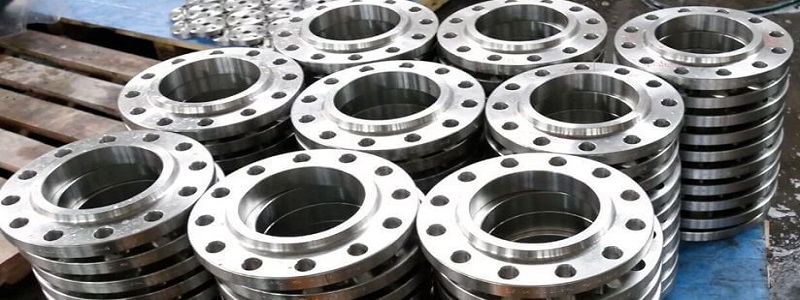
Socket weld flange simplified as SW flange, it has a recessed area (like a shoulder) in the flange bore, this shoulder serves as a guide to set the depth of the pipe that inserted to the flange. Socket welding flange initially designed for high pressure small diameters piping system.
The socket welding flange was firstly to use for stainless steel superheater, due to avoid cracking defects caused by thermal stresses in heating processes, and after years development it became a standard application for all types of material.
| Standards | ASNVASTM B16.5 / 16.36/16.47A/16.47B B2220 — 2001, DIN2527/2636/2637/2638/2566/2576/2633/2635/2642/2653/2655, BS 1560-3.1, BS4504-3.1, AS2129-2000 |
|---|---|
| Rate | From 150LBS to 2500LBS / PN10 to PN400 |
| Sizes | From 1/2" to 42" |
| Material | Carbon steel, Stainless steel, Alloy Steel, Special Alloy. |
| Type | RF FF RTJ |
Flanges
THREADED
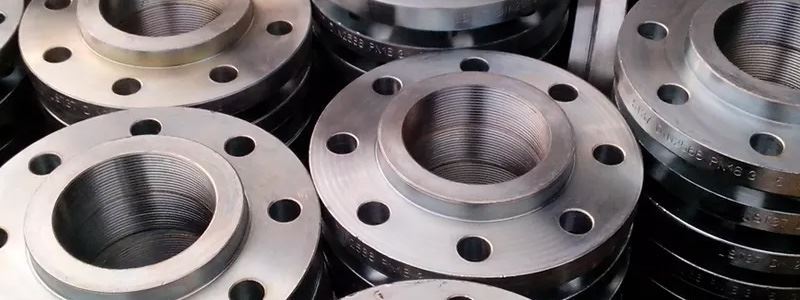
Threaded pipe flanges are the special type of flanges which can be attached to the pipe without welding. Threaded flanges are threaded in the bore which matches an external thread on the pipe. Threaded pipe flanges is just like to slip-on pipe flanges that are used with pipes that have external threads. It is used where small diameter and high pressure is required. These flanges are available in all materials, specifications, sizes and grades.
Threaded pipe flanges are typically provided with a raised face, flat face, or RTJ facing. When a raised face is essential for threaded pipe flanges, the standard height is 1/16" for threaded pipe flanges under 400#. For threaded pipe flanges of 400# and up, the standard threaded pipe flange raised face height is 1/4".
| Standards | ASNVASTM B16.5 / 16.36/16.47A/16.47B B2220 - 2001, DIN2527/2636/2637/2638/2566/2576/2633/2635/2642/2653/2655, BS 1560-3.1, BS4504-3,1, AS2129-2000 |
|---|---|
| Rate | From 150LBS to 2500LBS / PN10 to PN400 |
| Sizes | From 1/2" to 42" |
| Material | Carbon steel, Stainless steel, Alloy Steel, Special Alloy |
| Type | RF FF RTJ |
Flanges
SPECTACLE BLIND
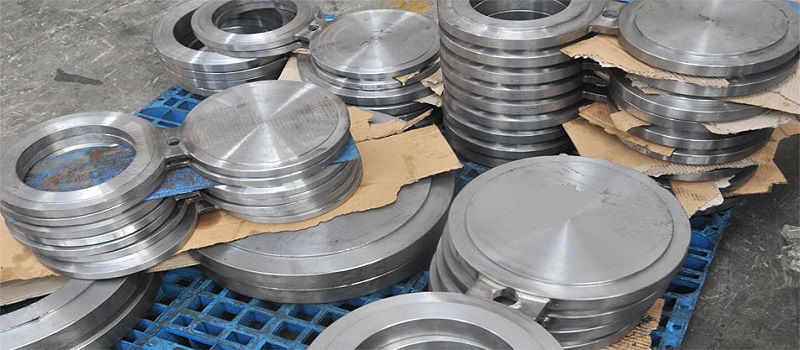
Spectacle Blinds are generally applied to permanently separating pipe systems, or just to connect with each other. A Spectacle Blind is a steel plate cut into two discs of a certain thickness. The two discs are attached to each other by section of steel similar to the nose piece of a pair of glasses. One of the discs is a solid plate, and the other is a ring, whose inside diameter is equal to that of a flange.
Spectacle Blinds be applied in systems, which regularly need to be separated from other installations. Normally, a Spectacle Blind is mounted in the "open" position so that flow through the pipe is possible. If the Spectacle Blind in the "close" position is rotated, the pipe is blanked off and no flow is possible. Maintenance on a pipe system can be a reason to rotate the spectacle in the "close" position.
| Standards | ASNVASTM B16.5 / 16.36/16.47A/16.47B B2220 - 2001, DIN2527/2636/2637/2638/2566/2576/2633/2635/2642/2653/2655, BS 1560-3.1, BS4504-3,1, AS2129-2000 |
|---|---|
| Rate | From 150LBS to 2500LBS / PN10 to PN400 |
| Sizes | From 1/2" to 42" |
| Material | Carbon steel, Stainless steel, Alloy Steel, Special Alloy |
Flanges
LAP JOINT STUBEND
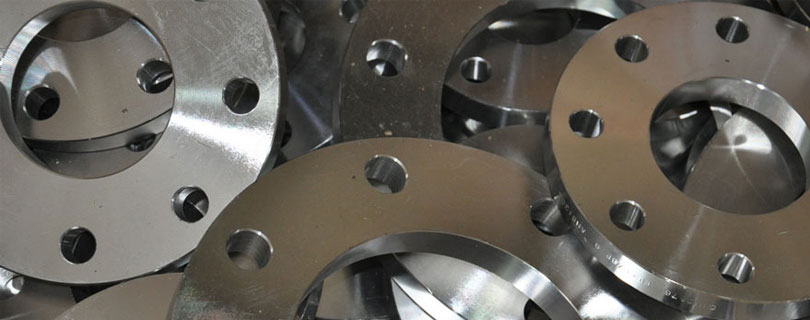
Lap joint flanges are popular in both piping and duct system design. But as with all flanges and piping system components, understanding both how the component functions and how various design differences will impact performance are essential to safe, reliable operation and optimal cost-effectiveness.
But as with all flanges and piping system components, understanding both how the component functions and how various design differences will impact performance are essential to safe, reliable operation and optimal cost-effectiveness.
| Standards | ASNVASTM B16.5 / 16.36/16.47A/16.47B B2220 - 2001, DIN2527/2636/2637/2638/2566/2576/2633/2635/2642/2653/2655, BS 1560-3.1, BS4504-3,1, AS2129-2000 |
|---|---|
| Rate | From 150LBS to 2500LBS / PN10 to PN400 |
| Sizes | From 1/2" to 42" |
| Material | Carbon steel, Stainless steel, Alloy Steel, Special Alloy |
| Type | RF FF RTJ |